
Why the Pharma Industry is Struggling to Find the Right Executives In 2026
Executive hiring in U.S. pharma is taking longer, shortlists are thinner, finalists hesitate and boards second-guess.
It is easy to blame “talent shortages” but what’s actually happening is more specific.
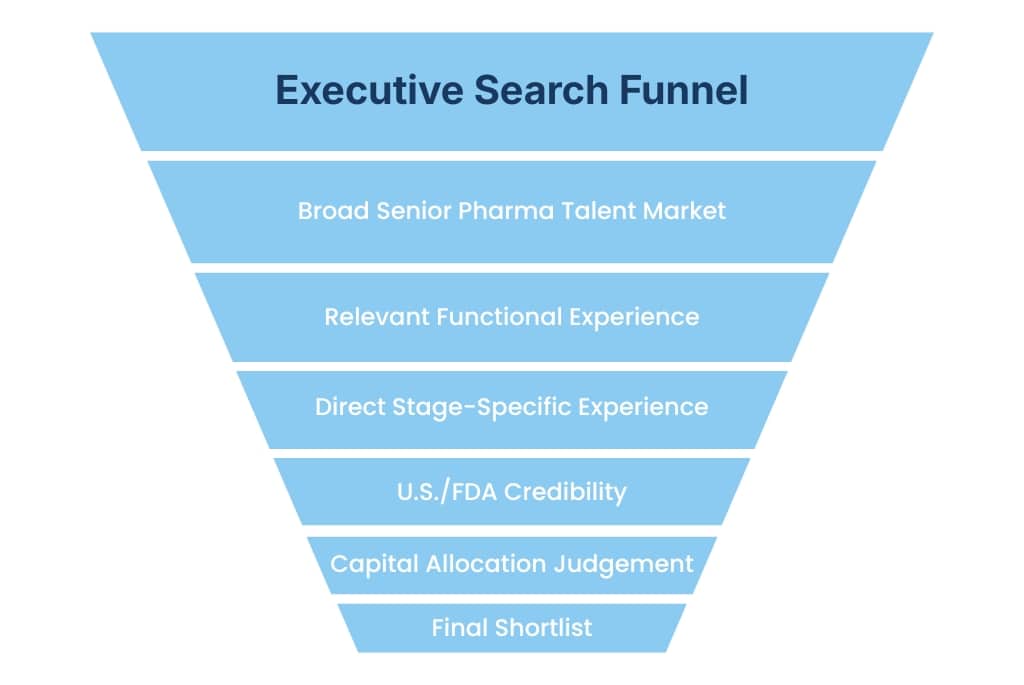
The job has changed faster than the candidate pool has evolved. Boards now expect one executive to carry scientific credibility, financial discipline, and regulatory judgment at the same time. That overlap in skills is a rare find.
This is what’s tightening pharma industry executive search.
Table of Contents
What Pharma Industry Executive Searches Look Like
A pharma industry executive search is the recruitment of senior leaders who directly influence drug development, regulatory approval, manufacturing reliability, and commercial performance.
These are roles like:
- Chief Executive Officer
- Chief Medical Officer
- Head of Regulatory Affairs
- Head of Quality
- Chief Financial Officer in development-stage biotech
This is not high-volume pharma recruitment where the focus is on the speed of the hire. The goal is to find a candidate that can perform under pressure.
When a development-stage company hires a CEO, that person may need to raise capital within 12 months, align with the FDA on trial design, and cut a program if data weakens. The margin for error is thin.
The Leadership Pipeline Is Aging in Roles That Require Experience
The U.S. workforce is aging broadly. The Bureau of Labor Statistics tracks participation by age, and workers 55 and older represent a meaningful share of the labor force.
In pharma, that trend matters more than it does in many industries because regulatory and development expertise accumulates slowly.
You cannot shortcut:
- Leading an end-of-Phase 2 meeting
- Negotiating labeling language
- Managing an FDA inspection under real scrutiny
- Scaling a biologics facility without compliance drift
Those experiences are spaced out over years, sometimes decades.
When senior leaders retire or step back, companies don’t lose just a title. They lose pattern recognition that has been developed over years, and pattern recognition is what boards are paying for.
The U.S. Market Amplifies Competition
The United States remains the largest pharmaceutical market by value. IQVIA’s Institute publications regularly analyze U.S. spending as a dominant share of global medicine expenditure.
Why does that matter for hiring?
Because executives with deep U.S. experience attract global attention. A regulatory leader who has successfully navigated FDA review carries credibility in other markets as well. The same goes for commercial executives who understand U.S. payer dynamics.
Strong candidates are rarely evaluating one opportunity. They’re fielding several at the same time.
Hiring managers feel this as offer competition, compressed timelines, and sudden withdrawals late in the process.
Capital Discipline Is Now a Core Hiring Filter
Biotech funding surged in the early 2020s and then corrected. Silicon Valley Bank’s Healthcare Investments and Exits reporting documents that swing in activity.
After the reset, investor tolerance changed.
Boards now probe executive candidates for operational discipline. They want evidence of:
- Prioritizing pipelines under capital constraint
- Making clean program cuts when data disappoints
- Managing burn rate without paralyzing development
- Communicating risk clearly to investors
EY’s Biotech Beyond Borders reporting describes a market shaped by constrained financing conditions and tighter investor expectations, pushing companies toward scenario planning and careful capital allocation.
Because of this, a candidate who excels scientifically but lacks evidence of financial judgment may stall late in interviews.
In the current market, many executive roles combine scientific authority with financial stewardship. That narrows the viable field of candidates.
FDA Variability Increases the Premium on Experience
The FDA publishes annual data on novel drug approvals through CDER.
These drug approval counts fluctuate year to year. The review timelines differ. Advisory committee outcomes are not perfectly predictable. When uncertainty like this rises, boards gravitate toward executives who have personally navigated regulatory inflection points. Not observers. Participants.
A Head of Regulatory who has prepared briefing documents for advisory committee meetings and managed post-complete-response strategy carries more weight than one who has supported these efforts from a distance.
While it’s rational to gravitate towards candidates with this experience, it also limits the number of leaders you can find. The number of leaders with direct advanced therapy approval experience is small. Advanced modalities introduce additional complexity in manufacturing, potency assays, and long-term follow-up. Not every regulatory leader has been inside that process.
As companies pursue more complex science, executive search becomes more niche.
Manufacturing and Quality Failures Are Public and Expensive
Manufacturing leadership in pharma carries regulatory and reputational exposure. FDA warning letters are publicly available. When a facility receives a warning letter, investors read it. Competitors read it. Partners read it. That visibility changes hiring dynamics. Boards increasingly treat Quality and Technical Operations leaders as risk controls, not plant managers.
As domestic capacity expands, companies need leaders who can scale output without creating compliance debt. Many executives have run operations. Fewer have scaled complex biologics manufacturing while maintaining inspection readiness.
Searches in these functions often run long because the bar for performance is high and the evidence for competence must be concrete.
The Real Constraint: Overlap Talent
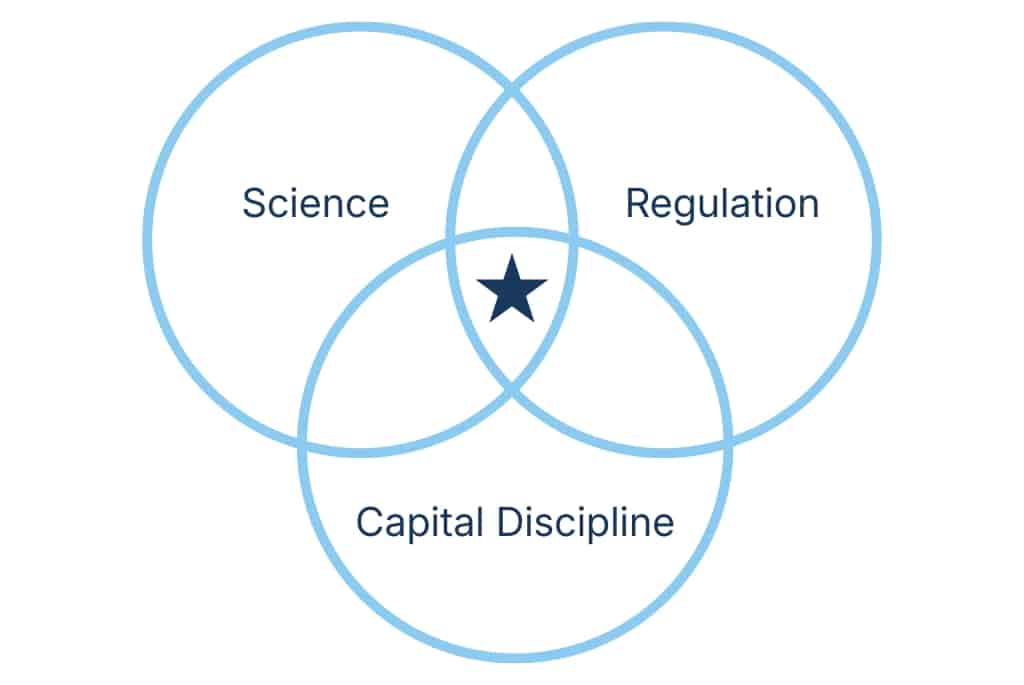
The tightest executive searches in pharma are not hard because of volume. They are hard because of overlap.
Boards increasingly want leaders who can operate credibly across:
- Science
- Regulation
- Capital
There’s no shortage of intelligent scientists. There’s no shortage of finance professionals. There’s no shortage of regulatory specialists.
There is a shortage of individuals who have worked at the intersection of all three under meaningful pressure.
Consider a clinical-stage biotech hiring a CEO. The board may want someone who can:
- Oversee pivotal trial execution
- Engage the FDA with authority
- Raise capital within 12 to 18 months
- Make disciplined portfolio decisions
Each requirement on its own is manageable. Together, they narrow the candidate list dramatically. This overlap problem explains why pharma industry executive search feels tight even when general employment indicators look stable.
What U.S. Hiring Leaders Should Adjust
First, define the mandate precisely. If the board cannot articulate the primary risk the hire must manage, then they cannot properly assess candidates during interviews.
Second, start succession conversations early. Waiting for a resignation increases exposure to market competition.
Third, evaluate evidence, not potential. Executive hiring in this sector rewards candidates who have already carried similar weight in another role.
Finally, expect longer decision cycles. More stakeholders weigh in on executive hires now, especially in capital-constrained or development-stage environments.
The opportunity lies in clarity. When the mandate is specific and the evaluation criteria are realistic, search timelines shorten. When expectations are vague or inflated, they do not.
Conclusion
Pharma executive hiring feels harder because the role itself has expanded. Leaders are expected to manage science, capital, and regulatory exposure simultaneously. The supply of executives with that combination of experience has not kept pace with demand.
Hiring in this market requires focus, patience, and a sober understanding of what the business actually needs. The companies that are precise and clearly define their needs move faster. The ones that chase a unicorn end up waiting.